

Introduction: Why AI Agents Are the Biggest Story in Tech Right Now
AI agents are dominating tech conversations in 2026, shifting from simply answering questions to autonomously completing multi-step tasks. This guide offers a comprehensive understanding of their function, impact, and future.
If there's one term dominating every tech conversation in 2026, it's AI agents. From boardrooms to college classrooms, from software teams to small businesses, they are quietly becoming the backbone of how work gets done. Unlike traditional chatbots, these systems don't just answer questions — they take action, complete multi-step tasks, and operate with a level of autonomy that was science fiction just a few years ago.
In this guide, we'll break down what AI agents are, how they work, why they matter for businesses and individuals, and what their future looks like. By the end, you'll have a complete picture of why AI agents are considered the next major leap in artificial intelligence.
What Are AI Agents?
Advanced AI systems, known as AI agents, are designed to perceive a goal, plan actions, and execute them with minimal human oversight, operating in a continuous loop of thought, action, observation, and adjustment.
At their core, AI agents are AI systems designed to perceive a goal, plan a sequence of actions, and execute those actions with minimal human supervision. While a standard AI chatbot responds to a single prompt with a single answer, these agents operate in a loop: they think, act, observe the result, and adjust their next move accordingly.
This is what separates AI agents from earlier generations of AI tools. They can:
- Break a complex goal into smaller, manageable steps
- Use external tools such as browsers, calendars, spreadsheets, and code editors
- Retrieve and process information from multiple sources
- Self-correct when an action doesn't produce the expected outcome
- Continue working across long, multi-step workflows without constant human input
Because of these capabilities, AI agents are often described as the shift from "AI that talks" to "AI that does."
How AI Agents Work: A Closer Look
The power of AI agents stems from their systematic operating pattern: they set goals, plan sub-tasks, use external tools, execute steps, and reflect to correct course, allowing them to handle complex workflows.
Understanding how these systems work helps explain why they're so powerful. Most AI agents follow a similar operating pattern:
- Goal Setting – A user gives the AI agent a high-level objective, such as "plan my product launch" or "fix this bug in my code."
- Planning – The agent breaks the objective into smaller sub-tasks and decides the order in which to tackle them.
- Tool Use – The agent calls on external tools — search engines, databases, APIs, code interpreters — to gather information or perform actions.
- Execution – The agent carries out each step, monitoring progress along the way.
- Reflection and Correction – If a step fails or produces unexpected results, the agent revises its plan and tries again.
- Completion – The agent reports back with the finished output, whether that's a document, a piece of code, a booked reservation, or a research summary.
This loop — plan, act, observe, adjust — is what makes these intelligent systems fundamentally different from single-turn AI models. It's also why they can handle tasks that used to require an entire team of people.
Why AI Agents Matter for Businesses
Businesses are rapidly adopting AI agents for significant efficiency gains, including reduced repetitive work, improved speed and accuracy, 24/7 operations, and lower operational costs.
Businesses across every industry are adopting these systems because of the tangible efficiency gains they offer. Here's why AI agents are becoming a core part of business strategy in 2026:
1. AI Agents Reduce Repetitive Work
Routine business tasks — data entry, scheduling, report generation, customer support tickets — are prime candidates for AI agents. By handing these repetitive workflows to them, employees can redirect their energy toward strategic and creative work that actually requires human judgment.
2. AI Agents Improve Speed and Accuracy
Because these systems can process information and execute tasks far faster than humans, businesses using them are seeing dramatic reductions in turnaround time. Whether it's an AI agent compiling a competitive analysis or processing customer refunds, the speed advantage is significant.
3. AI Agents Enable 24/7 Operations
Unlike human employees, they don't need breaks, shifts, or time zones. This means these systems can monitor systems, respond to customer queries, and execute scheduled tasks around the clock — a major advantage for global businesses.
4. AI Agents Lower Operational Costs
By automating tasks that once required dedicated staff or outsourced teams, they help businesses cut costs while maintaining — or even improving — output quality.
AI Agents in Software Development
Software development is a prime success area for AI agents, which are increasingly used to understand code, fix bugs, write tests, refactor, and generate documentation, transforming the developer's role to a director.
One of the clearest success stories for these intelligent tools is in software development. Developers today are increasingly relying on AI agents to:
- Read and understand existing codebases
- Identify and fix bugs autonomously
- Write and run tests to validate changes
- Refactor code for better performance
- Generate documentation automatically
Instead of writing every line of code manually, a developer can now describe a problem to an AI agent and let the agent handle the implementation details. This doesn't replace developers — it changes their role from "typist" to "director," where the human sets direction and the AI agent handles execution.
AI Agents in Everyday Life
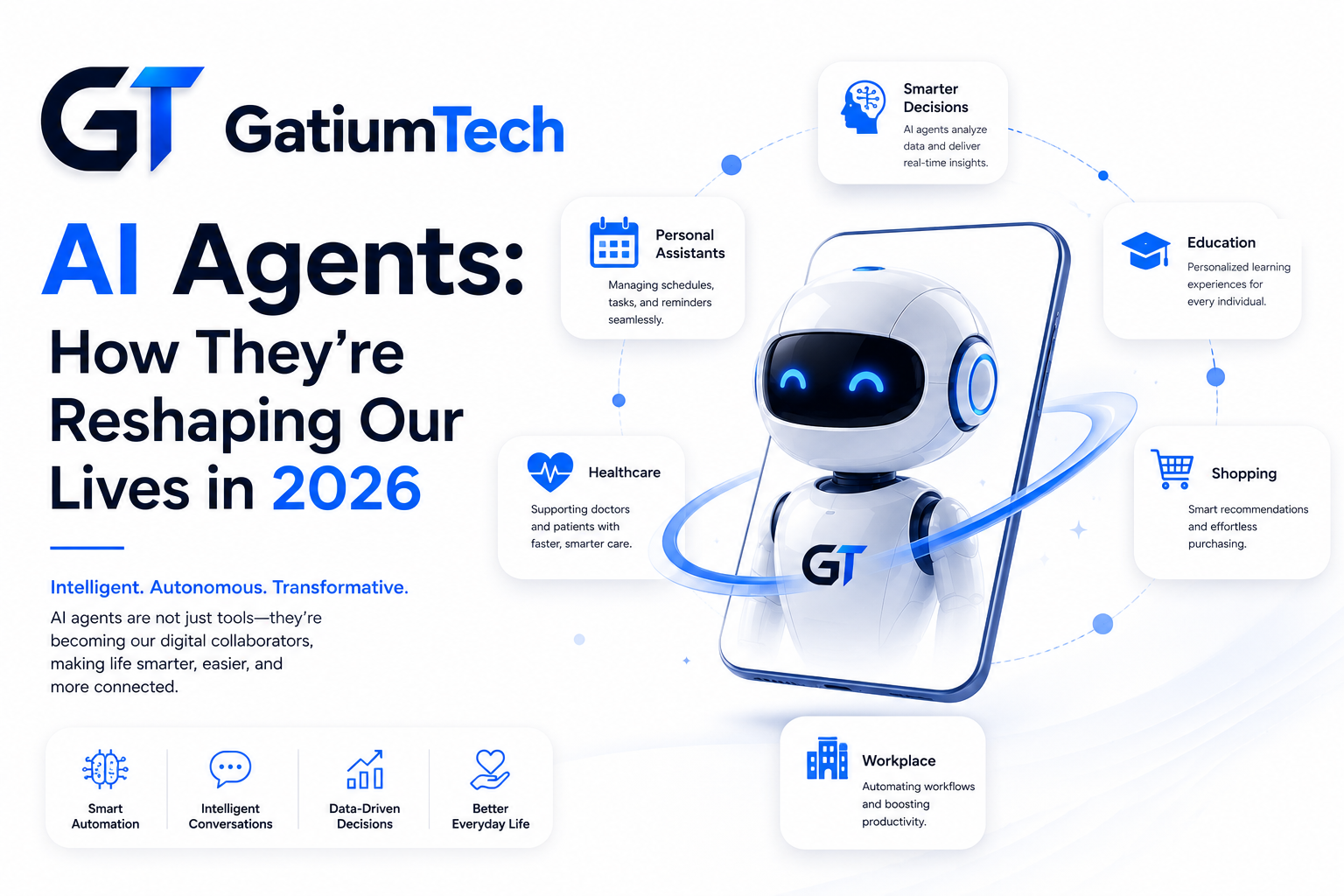
Beyond businesses, AI agents are integrating into daily consumer life, automating tasks like travel planning, shopping, personal finance, and household management, blurring the lines between app usage and delegation.
It's not just businesses and developers benefiting from this technology. In 2026, everyday consumers are using AI agents for tasks like:
- Travel planning – An AI agent can research destinations, compare flights, and build a complete itinerary.
- Shopping – These agents can compare prices across platforms and even complete purchases based on user preferences.
- Personal finance – They can track spending, flag unusual transactions, and suggest budget adjustments.
- Household management – From scheduling bill payments to managing subscriptions, these systems are quietly automating the busywork of daily life.
As AI agents become more integrated into consumer apps, the line between "using an app" and "delegating to an AI agent" is starting to blur.
The Challenges Facing AI Agents
Despite their potential, AI agents present significant challenges concerning trust, accountability, data privacy, over-reliance on automation, and potential job market disruption.
Despite the excitement, these intelligent systems come with real challenges that need careful attention:
1. Trust and Accountability
When an AI agent makes an autonomous decision that leads to a mistake, who is responsible — the user, the developer, or the agent itself? This question becomes more urgent as they take on higher-stakes tasks.
2. Data Privacy and Security
AI agents often need access to sensitive accounts, files, and personal data to complete their tasks. This raises legitimate concerns about how that data is stored, used, and protected.
3. Over-Reliance on Automation
As these systems take over more tasks, there's a risk that people lose familiarity with the underlying skills. Striking the right balance between automation and human oversight is essential.
4. Job Market Disruption
As they automate routine tasks across industries, workers will need to adapt by developing skills that complement — rather than compete with — AI agents.
Best Practices for Using AI Agents Responsibly
To effectively integrate AI agents, it's crucial to start with low-risk tasks, keep humans in the loop, monitor performance, prioritize data security, and stay informed about evolving capabilities.
If you're considering integrating AI agents into your workflow, keep these best practices in mind:
- Start small – Use them for low-risk, well-defined tasks before expanding to more complex workflows.
- Keep humans in the loop – Especially for high-stakes decisions, have a human review the AI agent's output.
- Monitor performance – Regularly evaluate how well your AI agents are performing and adjust as needed.
- Prioritize data security – Limit the access they have to only what's necessary for their tasks.
- Stay informed – The capabilities of AI agents are evolving quickly, so keeping up with best practices matters.
The Future of AI Agents
The future promises even more capable and integrated AI agents, with trends pointing towards multi-agent collaboration, enhanced tool integration, improved reasoning, and wider accessibility.
Looking ahead, AI agents are expected to become even more capable and more deeply embedded in both professional and personal life. A few trends to watch:
- Multi-agent collaboration – Multiple agents working together, each specializing in a different part of a task, will become more common.
- Better tool integration – They will gain access to a wider range of tools and services, making them more versatile.
- Improved reasoning – Future agents will make fewer errors and require less human correction.
- Wider accessibility – AI agents are moving beyond big tech companies into small businesses, schools, and individual households.
As this technology matures, AI agents will likely become as ordinary a part of daily life as smartphones are today — quietly handling tasks in the background while people focus on the things that matter most to them.
Conclusion
AI agents represent a pivotal technological shift, moving beyond mere information provision to autonomous task completion, demanding thoughtful adoption by organizations and individuals alike to navigate their profound impact on work and life.
AI agents represent one of the most significant shifts in how we interact with technology. Instead of simply answering questions, they now plan, act, and adapt to complete real tasks — from writing code to planning trips to running business operations. While challenges around trust, privacy, and job displacement remain, the trajectory is clear: AI agents are no longer a futuristic concept but a present-day reality reshaping how we work and live.
Organizations and individuals who take the time to understand AI agents — and adopt them thoughtfully — will be best positioned to benefit from this new era of intelligent automation. The age of AI agents has arrived, and it's only getting started.